
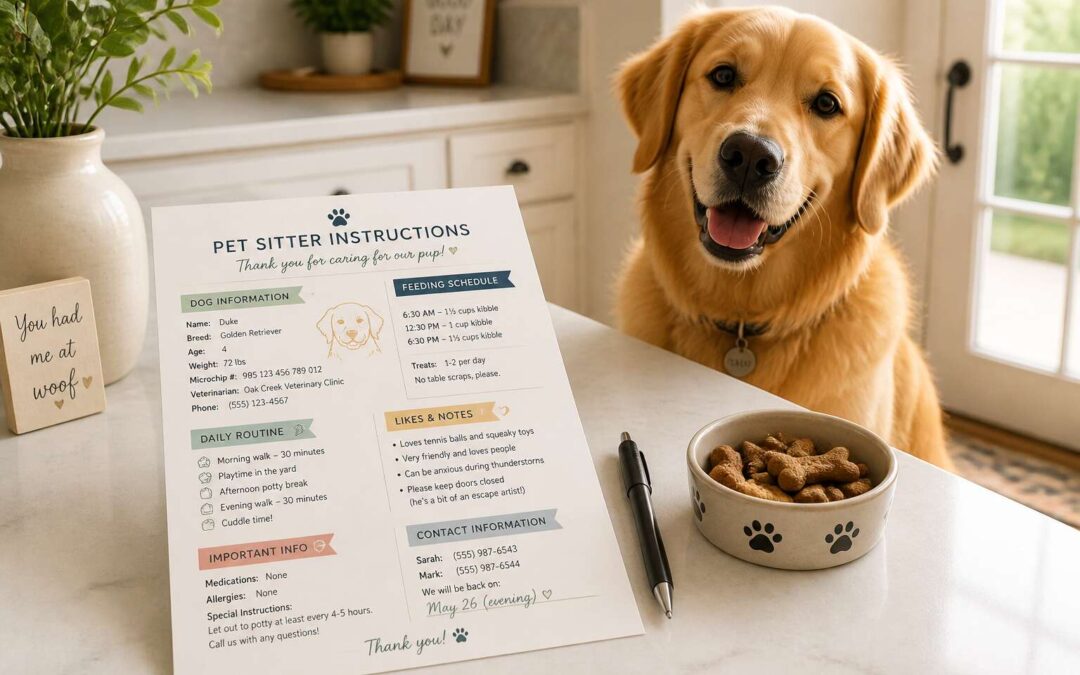
The Foundation of a Reliable Pet Sitting Plan
Identifying Your Pet’s Unique Personality and Habits
Most pet owners swear their animals are predictable. Then the sitter arrives, and the cat hides under the bed for three days. The foundation of a reliable sitting plan is not a list of tasks; it is a portrait of the animal’s inner world.
Start by observing your pet during a typical week. Does your dog pace before rain? Does your parrot mimic a specific ringtone? These details matter. Consider these core habits to record:
- Bathroom triggers, like certain noises or times of day
- Preferred sleeping spots and anxiety cues
- Social tolerance around strangers or other animals
- Food rituals, including refusals or begging patterns
Build a pet sitter instruction template around this behavioural map, not generic advice. When you name the quirks honestly, the sitter can respond with confidence instead of guesswork. That is where reliable care begins.
Essential Daily Routines: Feeding, Walks, and Playtime
Most pets measure their day in meals, strolls, and moments of play. A pet sitter instruction template that lists these anchors with precision removes guesswork. Feeding should include the specific brand of kibble, portion size, and whether treats are allowed after dinner. Walks need the preferred time, leash behaviour, and any off-leash areas where recall is reliable. Playtime demands similar clarity. Is fetch played on the lawn or only on tile? Does the cat chase feathers but ignore mice?
A practical routine may look like this:
- 07:00: Breakfast, measured in cups, followed by bathroom break.
- 12:30: Fifteen minute walk, same direction as usual.
- 18:00: Dinner and a short training session.
- 20:00: Indoor play with favourite toys.
Recording these details in your pet sitter instruction template helps the sitter maintain continuity, even when you are far from home.
Emergency Preparedness: Vet Contact and Critical Information
Emergencies do not send a warning. When your phone rings with a worried sitter on the line, the quality of your pet sitter instruction template decides how quickly they act. The vet’s direct line matters, but so does the after-hours number. Your regular practice may close at 18:00, and the nearest emergency clinic could be a long drive through unfamiliar suburbs. Write down the route and the expected travel time.
Include your pet’s microchip number, vaccination record, and any chronic conditions. A thorough pet sitter instruction template also covers:
- Known allergies and exact medication dosages
- Insurance details or the vet account number
- Written permission to authorise emergency treatment
I always add a note about how my own dog reacts to pain. That small detail tells a sitter when to rush and when to simply monitor. Your sitter should never have to guess who to call or what to say.
Home Security and Care Instructions While You’re Away
The South African Police Service consistently reports that a significant portion of home invasions occur while residents are on holiday. An empty driveway is a signal to opportunistic criminals. Your pet sitter instruction template must cover the house itself. It serves as the operational handbook for your property.
Within your pet sitter instruction template, specify which doors require deadbolts and which windows stay shut. I include the geyser timer settings, the pool pump schedule, and watering days for indoor plants. This reduces water damage and security system failures.
- Alarm arming sequence and panic code
- Security company response number
- Neighbour with spare key and delivery protocol
Handing over these details turns a sitter into a careful custodian. They maintain a lived-in appearance, rotating lights and opening curtains at set times. The house stays quiet, but never looks abandoned. That is the quiet work of a reliable plan, giving you true peace of mind!
Crafting a Clear and Comprehensive Pet Care Document
Simplifying Feeding Instructions with Charts and Schedules
Unclear feeding notes are the main reason a pet sitter calls you mid-holiday. A strong pet sitter instruction template turns feeding into a set of exact steps. I have seen handover notes that say ‘normal amount’ and nothing else. That fails when your cat needs a renal diet or your puppy eats measured meals.
A feeding chart adds clarity without extra work. List meal times, food types, and exact portions in columns. Add rows for water and treats. For example, your template might include:
- 07:00, 200g dry kibble
- 12:30, 150g wet food
- 18:00, 200g dry kibble plus a chew
This level of detail makes your pet sitter instruction template a working tool.
Detailing Medication Administration and Health Monitoring
Medication routines are where a simple oversight becomes a crisis. A sitter who guesses the dose is a sitter who makes a dangerous mistake. That is why my pet sitter instruction template includes a dedicated section for every pill, drop, and injection. I list the exact time, the precise quantity, and the method of administration. I also note the backup plan if the pet refuses the medicine.
For health monitoring, the template becomes a daily log. The sitter checks and ticks off:
- Water intake versus normal levels
- Stool consistency and frequency
- Energy and appetite changes
- Any discharge from eyes or nose
This record gives me peace of mind while I am away. I can see, in writing, that my dog has eaten and rested well. A thorough pet sitter instruction template turns a stranger into a temporary guardian who understands the small signs of wellbeing.
Describing Behavioral Cues and Comfort Strategies
A pet that suddenly licks its lips when a stranger enters the room is not flirting. It is signalling discomfort. A sitter who cannot read that cue will miss the moment to step back and offer a treat instead of a pat. That is why my pet sitter instruction template includes a behavioural cue sheet. It lists the signs that mean ‘give me space’ versus ‘play with me’ and matches each with a proven comfort strategy.
For example, the template notes that my dog tucks his tail when overwhelmed, and the solution is to lead him to his crate, not to crouch down and coo. For cats, flattened ears mean back away, while slow blinks mean trust. The document pairs every cue with a response, such as:
- Pacing or whining: move to the quiet room and play soft music.
- Hiding under furniture: sit quietly nearby, toss a favourite toy.
This level of detail turns a polite stranger into a competent interpreter, and that is what a pet sitter instruction template is ultimately for.
Including Contact Information and In-Home Safety Protocols
Most sitters meet your pet only once before you leave. That is why the contact information section of your pet sitter instruction template matters more than any welcome note. I include the vet, a backup contact, and a neighbour who holds a spare key.
But in-home safety protocols deserve equal weight. For instance, I specify which doors stick, where the security alarm panel lives, and how to switch off the geyser if needed. The template also lists these essentials:
- Pool gate closure
- Stove knob check
- The exact spot for the torch during load shedding
These details turn a stranger into someone who can protect your home.
Formatting Your Guide for Easy Reference
Your pet sitter instruction template must be a pleasure to read, not a puzzle. A neat structure with clear headings and white space does more than look professional; it reduces the chance of a missed step. I use a table of contents for longer documents, so a sitter can jump to feeding or medication without scrolling through unrelated details.
When formatting, consider these practical points for quick scanning:
- Bold or colour-code each category header
- Keep each instruction to one line where possible
- Place the most critical items, like emergency numbers, at the top
Also, think about how the document works on a phone. Many sitters reference the template on their mobile while walking a dog or prepping a meal. Use bullet points for steps and short paragraphs for context. The template you craft should survive the chaos of a busy morning, so the simpler the visual layout, the less mental load for the person caring for your pet.
Customizing Your Instructions for Different Pet Types
Dogs: Exercise, Potty Breaks, and Training Reinforcements
Most dog owners assume a walk suffices, but the pet sitter instruction template must capture the difference between a stroll and a workout. A border collie needs sprinting intervals, while a bulldog thrives on short, shaded walks. Note the exact duration and intensity, and specify potty break rhythms. Some dogs signal by scratching; others pace silently.
For training reinforcements, outline which commands you actually use. A sitter should never invent new cues. Write down the precise hand signals or verbal markers. For example:
- Use a firm “sit” before every meal.
- Reward calm behavior with a treat, not excitement.
- Redirect jumping by turning away, not pushing.
This level of detail prevents confusion and builds trust between the sitter and your dog.
Cats: Litter Box Management and Environmental Enrichment
Cats are territorial creatures, and their litter box habits reveal more than hygiene. A single change in routine can unnerve even the most confident feline. Your pet sitter instruction template should therefore treat the litter box as a zone, not an afterthought. Specify the exact brand of litter, the scooping frequency, and whether the box is covered or open. Some cats refuse a box that smells of another animal, so note any rotation rules for multiple boxes.
Environmental enrichment prevents restless behaviour. A sitter who merely refills water misses the point. Define which perches, scratching posts, or puzzle feeders your cat actually uses.
- Place a treat in the puzzle feeder at 3 PM daily.
- Rotate the three window perches so sunlight reaches each one.
- Leave the cardboard scratcher near the sofa, not in the hallway.
This level of detail prevents a sitter from improvising. Without it, a well meaning visitor might move a scratching post or change litter, and your cat will notice immediately. A precise pet sitter instruction template turns generic care into familiar territory.
Exotic Pets: Specialized Care and Habitat Maintenance
Reptiles and birds do not forgive improvisation. A pet sitter instruction template for exotic pets must include the precise temperature gradient, UVB bulb schedule, and misting routine. These animals rely on environmental stability, and a two degree drop can trigger anorexia in a ball python.
Habitat maintenance goes beyond cleaning. I once left instructions for a chameleon’s drip system and the sitter mistook it for a decoration. Add a checklist for daily checks!
- Verify basking lamp is on from 7 AM to 7 PM.
- Measure humidity with the analog gauge, not the digital one.
- Refill the fogger reservoir every morning.
The template should also detail safe handling, since many exotics stress easily. A parrot may bite a stranger who ignores its body language. Write down which substrates are toxic and which perches are off limits. Your pet sitter instruction template transforms a precarious situation into a routine.
Enhancing the Sitter’s Experience with Practical Templates
Using Checklists to Ensure Nothing Is Forgotten
A pet sitter instruction template only works when it feels practical. Sitters walk into your home with many responsibilities. A checklist reduces that burden. It replaces guesswork with clear steps.
In my experience, adding a simple daily checklist to the template makes a real difference. For example:
- Check water levels and record any change in appetite
- Look for loose cords or other new hazards
- Take one photo and send it to the owner
This structure helps sitters spot issues early. They are not improvising. They follow a sequence you have already planned. That lowers their stress and keeps you in the loop.
Incorporating Visual Aids and Photo References
Your sitter stands in your kitchen, phone in hand, facing three identical jars. Does the fish oil go to the dog or the cat? A single photo inside your pet sitter instruction template removes that hesitation before it forms.
Visual specificity carries information faster than text ever will. In my own experience, a photo of the exact treat pouch ends more confusion than any written note. An image of the water line, the scoop size, and the leash clip makes the correct action obvious.
- Capture the brand and bag of kibble where it lives on the shelf.
- Photograph the backyard gate latch in its locked position.
- Show the hiding spot your shy pet retreats to when the doorbell rings.
Photo references build quiet confidence. The sitter moves through your home with purpose because they have seen the evidence with their own eyes. That confidence shows up in how they handle your pet!
Providing Backup Plans for Unexpected Situations
A power outage at 2 AM turns a routine sit into a test of improvisation. The best pet sitter instruction template already holds the answer. It includes a backup plan for every scenario you can imagine, and a few you cannot.
Your sitter needs clear fallback steps for common disruptions. Provide a simple numbered sequence for each contingency. For example:
1. If the usual kibble is out of stock, substitute with the emergency bag in the pantry.
2. If the gate latch sticks, use the side door key.
3. If your cat hides for more than 12 hours, text the neighbour.
These instructions remove panic from the equation. The sitter acts with the same calm you would. That calm transfers to your pet, keeping their routine stable even when the world wobbles. Practical templates turn uncertainty into procedure, and procedure into peace of mind.
Creating a Quick-Reference Card for the Sitter
A laminated quick-reference card condenses the essential details into something the sitter can carry in a pocket. Print the feeding times, the walk route, and the medication schedule. Add the Wi-Fi password, the security code, and the neighbour’s number. Keep the font large enough to read in dim light.
Sitters rely on this card during the first hour, when the pet is anxious and the house still feels unfamiliar. Hand it over with the keys and explain that it follows the same order as the full pet sitter instruction template. That repetition builds quiet confidence. A sitter who can glance at a card instead of hunting through a binder keeps the day moving smoothly, and your pet senses that ease.
Digital vs. Printed Templates: Pros and Cons
I have watched sitters fumble with a ringing phone while a terrier tugs the leash. Digital templates offer convenience, but the printed page wins in a crisis. A pet sitter instruction template stored in a cloud drive allows instant edits when your return time shifts. You can text the new version and move on. However, paper copies never freeze or dim, and a sitter can flip through them while holding a squirming puppy.
Consider the tactile reality of a kitchen counter. Printed sheets get coffee stains and paw prints, which somehow makes them feel more trustworthy. Digital files stay pristine, but they demand a charged device and steady hands.
- Digital: instant updates, searchable, easy to resend.
- Printed: readable in any light, no battery, simple to annotate.
I recommend a hybrid. Keep the master pet sitter instruction template digital for accuracy, then print the daily pages for the sitter’s apron pocket. This balance respects both technology and instinct.
Updating Your Instructions for Each Season
A Karoo farmer once said, “The land changes every month, so must your plans.” Your pet sitter instruction template deserves the same treatment.
A practical template removes guesswork. When the sitter arrives, they find a clear daily rhythm, not a confusing jumble. I add a blank space for the sitter to jot down observations. This turns a static document into a useful working tool.
South African seasons are dramatic. Summer brings scorching heat, so walks happen before sunrise. Winter chills the tiles, so the cat needs a heated bed. Update your pet sitter instruction template each quarter to match these realities!
- Summer: adjust water bowl placement and shade access.
- Winter: switch to indoor games and extra blankets.
- Rainy season: designate a towel station and indoor potty area.
A template that adapts shows you respect the sitter’s daily challenges. It prevents simple oversights and keeps the animal safe. That is the essence of a reliable guide.
Preparing for a Successful Handoff and Follow-Up
Conducting a Pre-Trip Walkthrough with the Sitter
A successful handoff begins with a pre-trip walkthrough. This is where the pet sitter instruction template transforms from paper into practice. I guide the sitter through each room, showing where the first aid kit lives, which window sticks, and how the gate latches. We practice filling the water fountain together. We cover the easy to miss details:
- Where pet food and treats are stored.
- How the alarm arms and disarms.
- Which doors need a firm push to close.
The sitter sees the cat’s favourite perch and the dog’s napping spot. After the walkthrough, we sit down and review the template page by page. I encourage questions! Then I follow up the next day with a short message, asking how the animals are settling. Any confusion gets corrected immediately. That follow-up turns a good sitter into a confident one. The walkthrough and follow-up make this pet sitter instruction template work for both of you.
Establishing Communication Protocols and Regular Check-Ins
On the morning of departure, I send a final message to confirm the sitter has everything they need. The pet sitter instruction template stays visible on the counter, open to the quick reference card. I mention when I will next be reachable and trust the sitter to handle the interim.
Regular check-ins create a rhythm of reassurance. I establish whether the sitter prefers WhatsApp, a phone call, or an email, and I record those preferences in the template itself. Our agreement is simple:
- A brief morning ping to confirm everyone ate.
- A photo or short note by evening.
This communication protocol keeps worry in check. The pet sitter instruction template works because both parties understand what silence means. When nothing is reported, I know the animals are at ease.
Gathering Feedback and Refining Your Template for Future Trips
The handoff happens at the door, keys changing hands and the pet sitter instruction template folded into a back pocket. I give a final nod without extra speech. The sitter already knows the routine; the template exists to answer questions I cannot predict. After returning, I seek their honest report. What did they wish they knew? Which page did they never open? I collect those answers with care.
A simple list captures the useful parts:
- Which instructions caused hesitation.
- Which sections were ignored entirely.
- Which details required extra explanation.
From that list, I revise the pet sitter instruction template before the next trip. Each journey deposits a new layer of clarity into the document. The template, once a static guide, becomes a living record of every homecoming.