
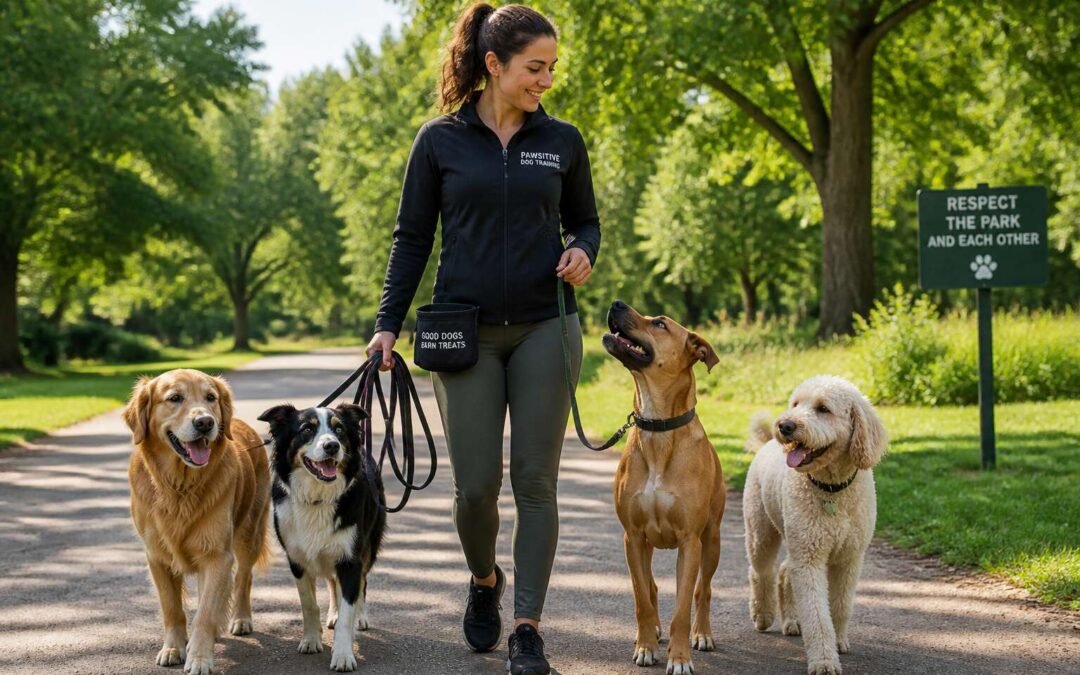
The Role and Value of Combining Walking with Obedience Training
Why Professional Walkers Need Training Expertise
A frustrated owner yanking a leash while the dog ignores every command is a common South African sight. That tension comes from treating walking as mere exercise. Walking and obedience training belong together, because each step rehearses focus and self-control. A professional walker with training expertise turns a routine stroll into a productive session.
This role matters beyond convenience. Dogs that pull, lunge, or bolt become dangerous. A dog walker trainer understands how to read body language and correct behaviour calmly. The value shows in a dog that walks loosely on the lead. From my experience, effective walkers use these techniques:
- Consistent commands at intersections
- Brief pauses to reinforce sit or stay
- Changes in pace to test recall
A dog walker trainer who combines exercise with obedience saves owners time and builds trust. The walk becomes the classroom, and the dog learns to respond in real conditions.
Key Responsibilities Beyond Basic Leash Handling
A dog walker trainer in South Africa must look beyond the lead and collar. The street presents unpredictable variables: pedestrians, bicycles, roaming animals. The walker’s primary responsibility is reading the dog’s emotional state before it escalates into reactive behaviour. This requires observation skills beyond basic handling. I have watched walkers lose control in seconds simply because they missed the early signs.
Part of the role involves understanding each dog’s threshold. Some dogs need a slower introduction to busy streets. Others need consistent redirection when they fixate on a trigger. The walker must also document progress for owners, noting what works and what doesn’t.
- Assessing stress signals before they become problems
- Adjusting routes based on the dog’s temperament
- Communicating behavioural observations to owners
This combination of walking and obedience training creates a reliable routine that owners can trust.
How Integrated Training Improves Canine Behavior and Safety
A dog walker trainer converts each walk into a training session. Obedience cues practiced amid traffic and pedestrians build focus. A dog that learns to sit when a skateboard approaches develops a response that prevents accidents. This integration reduces reactionary lunging because the dog associates movement with rewards for calm behaviour.
Consistency across walks strengthens the bond. The dog learns that compliance leads to forward progress. Owners observe fewer incidents of pulling or snapping. The walker becomes a reliable guide.
- A warm up with attention cues
- A distraction segment testing impulse control
- A cool down reinforcing loose leash walking
This structure turns routine exercise into behavioural conditioning. In South Africa’s diverse neighbourhoods, this blended role improves canine safety and owner confidence.
Essential Skills and Qualities for Dual-Service Professionals
Reading Canine Body Language on the Move
Reading a dog’s posture while managing a lead and reinforcing commands demands situational awareness. Most owners watch a wagging tail and call it happiness. A dog walker trainer sees the stiffened shoulder, the lip lick, or the weight shift that precedes a reaction. These micro-signals appear in split seconds, often while the walker’s gaze is fixed on traffic.
Movement changes the vocabulary! A tucked tail during a sit means one thing. A tucked tail while trotting past a gate means another. Professionals track sequences, not isolated gestures. They notice pinned ears, shortened gaits, and whether the dog scans the environment or dismisses it. This feeds directly into training decisions.
A dual-service professional splits attention without splitting focus, monitoring:
- Breathing rate and eye contact patterns
- Leash tension versus actual body tension
- Environmental triggers ahead of the dog, not only beside it
Applying Positive Reinforcement Techniques During Walks
There is a specific competence that separates a dog walker trainer from someone who merely carries a lead. It lives in the stillness before a decision. Positive reinforcement during walks is not a series of rewards. It is a discipline of consistent signals delivered at the exact moment a behaviour appears.
This discipline demands a steady nervous system. Dogs detect cortisol shifts and grip changes through the leash. A professional who can regulate their own tension can teach a reactive dog to choose calmness in the same breath.
Essential qualities include:
- Timing that approaches instinct
- Emotional neutrality during canine outbursts
- An eye for the smallest offered behaviour, the half turn of the head, the softening of the jaw
The best dog walker trainer I have worked alongside moves through a walk with silence. He does not command. He observes, waits, and marks the quiet choice. That is the craft.
Managing Leash Reactivity and Environmental Distractions
Cape Town’s pavements force a dual-service dog walker trainer to think like a traffic controller and a behaviourist at once. A reactive dog near a taxi or a skateboard needs a handler who can split attention without losing composure.
- Scanning the full environment while watching the dog’s muzzle
- Adjusting pace before the trigger appears
- Staying neutral when another dog erupts
These qualities matter more than physical strength. The best dog walker trainer I know reads a block ahead, then releases tension through a loose grip. That skill keeps walks safe in Johannesburg’s busy suburbs.
Building Trust and Rapport with Both Dogs and Owners
Every dog walker trainer knows that trust is a slow, deliberate craft. It begins with the owner’s hand hesitating over the lead. You earn that moment through a set of unflashy skills:
- Consistent responses, even when the dog tests you
- Clear observation, noting what the owner misses
- Brief, honest updates after every walk
These elements create a predictable pattern. The dog relaxes into your pace. The owner relaxes into your report. In Durban, where humidity frays tempers, that calm is rare. I have seen this relationship crack when a walker stays silent. But rapport survives the difficult walks, the sudden thunderstorms, the unexpected loose dog. It survives because you made yourself dependable. That dependability is the core of this profession.
Certification and Training Pathways for Career Advancement
Recognized Programs for Combined Walking and Training
Certification signals a shift from hobbyist to professional. A dog walker trainer who pursues recognised qualifications gains a vocabulary for behaviour that ordinary walkers lack. In South Africa, programmes like the Animal Behaviour Consultants of South Africa (ABCSA) offer structured pathways, while international bodies such as the Certification Council for Professional Dog Trainers provide globally portable credentials.
Some programmes integrate walking and training components directly:
- ABCSA’s canine behaviour practitioner track includes practical handling assessments
- KUSA accredited courses require supervised walking sessions with reactive dogs
- Online hybrid options pair theoretical modules with in-person mentorship in Johannesburg and Cape Town
These qualifications equip a dog walker trainer to interpret subtle stress signals mid-stride and adjust technique accordingly, a skill that separates routine exercise from genuine training. Clients increasingly ask about credentials, and documented certification provides measurable assurance.
Gaining Hands-On Experience Through Mentorship and Volunteering
Certification opens doors, but a dog walker trainer builds competence through hours of supervised work. Mentorship matters because reactive dogs rarely behave predictably. Volunteering at local shelters or shadowing an established professional provides the exposure that theory cannot replicate.
Consider these ways to accelerate your practical learning:
- Assist at group training sessions and observe how handlers adjust pace
- Volunteer for behaviour assessments at rescue centres
- Track your progress with a mentor who reviews your handling choices
Each encounter sharpens your judgment. That experience appears in your posture, your timing, and your ability to stay calm when a dog lunges. Clients see it, too. A dog walker trainer with hands-on history stands apart from someone who only studied slides.
Continuing Education: Workshops, Seminars, and Online Courses
According to the International Association of Canine Professionals, over 60% of dog owners expect their walker to handle basic behavior modification. That figure keeps rising, pushing a dog walker trainer beyond initial accreditation. Continuing education becomes the lifeline for staying relevant, especially in South Africa where urban spaces and wildlife encounters create unique challenges.
Workshops offer hands-on practice with new equipment like head collars, while online courses dive deeper into canine nutrition or first aid. Seminars provide live demonstrations of tricky scenarios, from off-leash greetings to crowds. Investing in these pathways builds confidence and credibility.
- Short courses on fear-free handling
- Webinars covering local legislation about animal control
- Advanced modules for high-energy breeds
I have seen how a single weekend seminar transforms handling technique. Learning never stops! Each certificate adds a layer of trust with clients.
Specializations: Puppy Training, Behavior Modification, and More
Certification now functions as a career map, not a finish line. A dog walker trainer who specialises in puppy training gains access to a client base making early decisions about obedience. Behavior modification certification requires hundreds of logged hours and supervised assessments, yet it distinguishes a walker in a crowded market.
Specialist pathways worth investigating:
- Puppy training for socialisation and bite inhibition
- Behavior modification for resource guarding and separation anxiety
- Canine fitness certification for athletic breeds
The choice should align with regional demand. A dog walker trainer operating in Gauteng may find puppy foundations more valuable than advanced rehabilitation. Certification bodies offer modular routes that build on one another. Each credential compounds the professional’s authority and justifies higher rates. The supervised practical work, the failure and retesting, produces a more observant walker.
Understanding Legal and Ethical Considerations in the Field
One lawsuit can erase a decade of training certifications. Career advancement in this field depends on legal and ethical groundwork as much as credentials in South Africa.
Municipal licensing, the Animal Protection Act, and public liability cover are non-negotiable. A certified dog walker trainer who neglects these faces financial ruin. Ethical protocols require clear reporting.
- Renew municipal permits annually
- Carry R5 million liability insurance
- Document client consent forms
Certification pathways from reputable bodies build your reputation, but compliance protects it. I have seen professionals lose everything despite excellent training. The route to senior status runs through legal diligence, not just practical hours.
Business and Marketing Strategies for Multi-Service Pet Care
Pricing Structures for Combined Walking and Training Sessions
Most pet owners in South Africa expect walking and training to be billed separately. That assumption creates friction for the dog walker trainer who wants to offer both. The solution is a tiered pricing structure that rewards commitment. For example, a single session includes basic leash work. A package of ten sessions includes behavior tracking and progress reports. This approach increases perceived value and reduces churn.
To market these combined sessions effectively, consider these strategies:
- Frame the price as an investment in long term obedience.
- Offer a discount for prepaid bundles.
- Emphasize the time saved for owners.
I have found that transparency about pricing builds trust. When you communicate exactly what each tier covers, clients stop comparing you to ordinary walkers. They see a dog walker trainer as a specialist, which justifies the premium. The result is a sustainable service model.
Packaging Services to Attract Ideal Clients
The best clients are not found. They are built through service design. When you package walking, training, and check-ins into a single monthly plan, you remove the hesitation that makes owners procrastinate. A dog walker trainer who bundles services positions their work as essential rather than optional. I have seen this model turn casual enquiries into long term clients.
One approach that works well in South African suburbs is the lifestyle package.
- Daily walks with embedded obedience drills
- Weekly progress notes for the owner
- Priority booking for behavior consultations
This structure attracts owners who value consistency over cost. They are not comparing you to a casual walker. They are buying a system. The dog walker trainer becomes the person who knows their dog’s patterns, triggers, and progress. That relationship filters out price shoppers and brings in clients who stay for years.
Using Social Media to Showcase Training Moments and Success Stories
“Look at him now!” The owner’s voice cracked watching her rescue crossbreed greet a stranger without barking. That phone clip became powerful marketing. In South African suburbs, trust travels through WhatsApp groups. A dog walker trainer who shares these moments becomes part of the neighbourhood’s daily story.
The camera requires patience. A five minute walk can yield one clip of a dog choosing to sit as a bicycle passes. That clip demonstrates calm behaviour more effectively than any website. Owners want proof, not promises.
- Short videos of a dog walker trainer reinforcing a settle command near a gate
- Progress sequences showing leash tension over several weeks
- Captions that explain what owners can do at home to support progress
These items accumulate into a portfolio. A South African client scrolling the feed sees a professional who understands their world: loadshedding evenings, stray cats, nervousness around security guards. That visible record of reliability attracts clients ready to commit.
Building Referral Networks with Veterinarians and Pet Sitters
Veterinarians hear the same complaints daily: pulling on the lead, barking at the gate, chewing the couch. They treat the physical body but have little time for behavioral rehabilitation. A dog walker trainer who leaves business cards at the reception desk, or drops off a monthly summary of training outcomes, becomes a trusted partner to that practice. Pet sitters watch a dog’s routine collapse when owners travel. They need backup sessions that maintain training between visits, and a dog walker trainer who answers the call builds loyalty on both sides.
This exchange carries authority. When a vet recommends a specialist, the client listens because the advice comes from a professional already trusted. Reinforce these relationships with deliberate actions:
- Offer the vet a complimentary assessment of a difficult case
- Ask pet sitters to send the owner a progress note after each session
- Follow up with the referrer after the first session to report a win
Closing that loop earns the next referral.
Collecting and Promoting Client Testimonials and Before-After Results
Your clients’ words are your most honest marketing. When a client watches their reactive dog walk calmly past a stranger, they want to tell someone. I capture that moment by asking for a short written account, or recording a voice note during the final session of a training package. The words arrive raw and specific, and that specificity matters most.
Before and after results work best when they show behaviour, not appearance alone. A dog who once lunged at bicycles now heels past them. An owner who dreaded walks now takes two each day. Pair these outcomes with the testimonial and you have proof that a dog walker trainer delivers lasting change.
Ask clients to describe:
- The behaviour before training
- The turning point you witnessed
- Their daily routine now
Potential clients searching for a dog walker trainer will see evidence, not promises.
Differentiating Your Brand in a Competitive Local Market
In any South African suburb, you will find ten dog walkers before you find one dog walker trainer. That gap is your market position. A walker moves dogs through space. A trainer changes how those dogs exist in the world. The distinction is not semantic; it is structural.
Multi-service pet care creates a layered brand that resists commoditisation. In my experience, clients stop comparison-shopping when they understand that a walk includes impulse control, environmental desensitisation, and calm handling. Your brand answers a specific problem: the reactive dog, the puller, the anxious owner.
Differentiation rests on what competitors cannot replicate:
- Your documented process for high-traffic walking routes
- Your observed results with local breeds
- Your referral relationships with veterinary practices
That specificity defines your reputation. In a crowded market, the dog walker trainer who communicates their method clearly tends to outperform one promising generic care.
Overcoming Common Obstacles in the Field
Dealing with Aggressive or Reactive Dogs on Walks
A dog’s hackles rise and a low growl cuts through the air. That moment tests every skill you possess. As a dog walker trainer, I put safety first. I keep spatial awareness and an exit route in mind. Redirecting a reactive dog takes timing. Distraction works sometimes, but turning away is often better. I use a front clip harness and never force two tense dogs to meet. A sudden bicycle can trigger an explosive response. In those moments, I rely on practiced actions:
- Stopping to lower arousal
- Changing direction with a loose leash
- Creating distance using a parked car
By staying alert, you reduce escalation. Patience is active, not passive. It shapes calmer behaviour over time.
Balancing Training Objectives with Walk Time and Exercise Needs
A 30 minute booking rarely matches the reality of the pavement. In South Africa, the midday sun forces you to shorten routes, and the morning rush demands quick progress. As a dog walker trainer, I plan for obstacles before they appear. The goal is to weave training cues into active exercise without turning the outing into a drill.
The high energy dog that needs to run before it can focus is a common test. I use the first five minutes for a structured trot, then introduce a sit or loose heel. The older dog with stiff joints requires a different balance. A short block of scent work on the pavement replaces a missed kilometre while still meeting exercise needs.
- Assess the dog’s energy level in the first three minutes
- Adjust the route based on weather and terrain
- Use rest stops for a quick recall or settle cue
Clients often want a tired dog and a trained dog from one session. Physical fatigue and mental focus are separate needs. A dog walker trainer balances them by alternating movement with brief training windows. That approach protects the walk’s purpose and keeps expectations realistic.
Effective Communication Strategies with Pet Parents
The route can flood after a burst pipe, a gate swings open, a cyclist startles the pack. I carry a compact first aid kit and a spare slip lead, but the real obstacle is deciding when to push through and when to turn back. A dog walker trainer who reads the street signs and the dog’s signals can convert a disruption into a training moment.
Clear communication with pet parents starts before the walk. I send a short voice note instead of a long text, and I ask about the dog’s sleep and appetite that morning. When pet parents understand from a dog walker trainer what happened on the route, they stay engaged with the training plan.
- Report setbacks in neutral language
- Share one success, even a small one
- Ask for preferences on recall cues
Preventing Burnout and Maintaining a Sustainable Schedule
The route can shift without warning. A dog walker trainer who chases every client emergency will soon lose the focus needed for safety. I learned to block buffer time between appointments for travel and for the unexpected gate that sticks or the sudden thunderstorm.
Setting hard boundaries around working hours protects the craft. I keep a waiting list instead of overbooking. I rotate high energy dogs with calm seniors. This rhythm prevents the creeping fatigue that dulls observation skills.
- Track daily distances to avoid overuse injuries
- Schedule one admin day weekly for invoicing and route planning
Burnout shows up as irritability. The dogs notice. A sustainable schedule is the foundation of consistent training.