
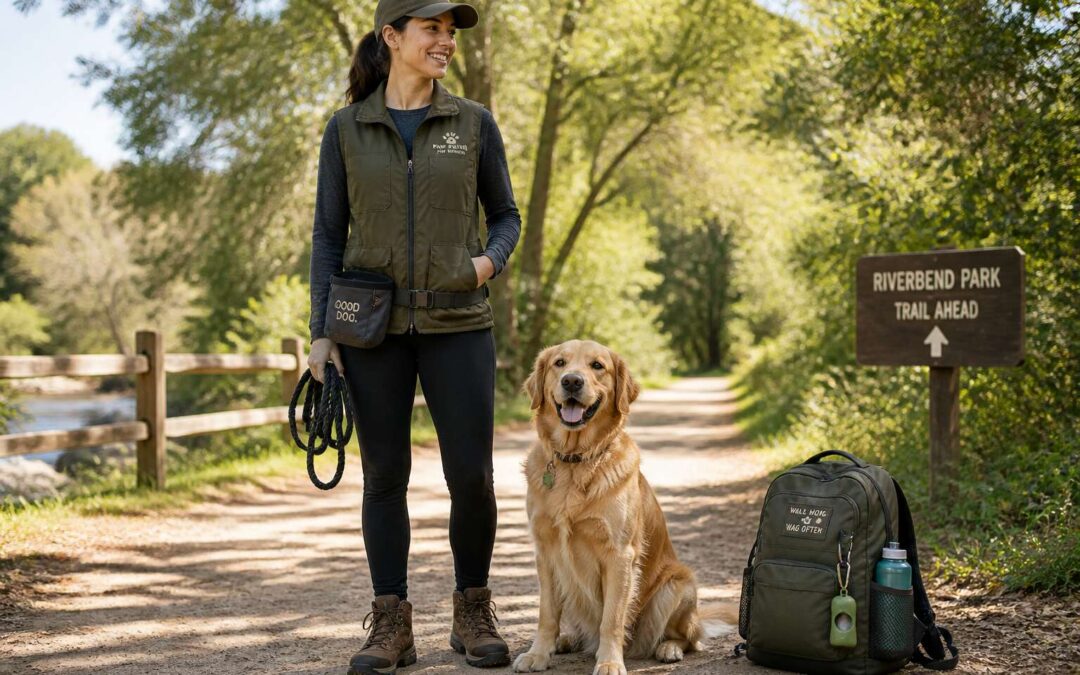
The Professional’s Everyday Carry
Leash Selection by Material and Length
A leash that snaps mid-walk ends a shift instantly. In Johannesburg or Durban, the material you choose must match your terrain. Nylon webbing dries fast but abrades against rough edges. Biothane resists salt water and sun damage, making it ideal for coastal routes. Leather holds up well, yet absorbs moisture and slows you down on wet days.
Length matters just as much. A 1.2 metre lead keeps control on narrow pavements. A 3 metre training line offers freedom for open fields, but you must reel it in quickly.
- Nylon: lightweight, quick to dry, vulnerable to friction.
- Biothane: waterproof, low maintenance, handles heat.
- Leather: strong, requires conditioning.
Packing the right dog walker gear means carrying one short and one long lead, matched to the surfaces you expect before you head out.
Harness Versus Collar Tradeoffs
Consider the physics of a sudden squirrel sighting. Seventy five percent of dog walker gear mishaps involve a hard wrench, and the collar transfers that force directly to the throat. A harness spreads the load across the chest, kinder for brachycephalic breeds like pugs, but it adds bulk and can rub short coats.
I find front clip harnesses discourage pulling by rotating the dog’s shoulders, yet they require precise fitting. Collars allow quick leash swaps and make ID tags visible, but they fail on slender necks like whippets, where slipping is a real risk.
- Harness: better for breathing, slower to put on.
- Collar: faster for exits, risky for pullers.
Assess each client’s temperament and neck anatomy before your shift. Your bag must hold both, because dog walker gear that suits a labrador might not suit a dachshund.
Hands-Free Waist Belt Systems
Your bag holds a waist belt system too. A belt clips into the leash and shifts the load from your arm to your pelvis. I use one on longer runs, when a terrier decides to test the fence line. The pull meets my hips instead of my shoulder, and my hands stay free for gates, treats, and phone calls.
The harness and collar arguments matter, but hands free access changes the entire feel of a shift. My belt carries a collapsible bowl and a compression pouch for waste bags. That is the sort of dog walker gear that keeps a calm trot through a busy park. You want a quick release buckle that snaps clean under tension, and webbing wide enough to avoid chafing through a rugby shirt.
Waste Management Kits
Every professional walker learns to treat waste management as seriously as leash work. A proper kit keeps you prepared on trails, pavements, and at the dog park. My own setup lives in a dedicated side pocket of my bag, separate from treats and first aid supplies.
The essentials are simple but specific. I carry a roll of biodegradable bags, a small bottle of hand sanitiser, and a clip-on dispenser that attaches to my belt loop. For longer shifts, a compact waste bag holder with a carbon filter keeps smells contained until I find a bin.
- A folding trowel for off-leash areas without bins
- A spare roll of bags in the car
- A zip pouch for used bags when bins are scarce
This kind of dog walker gear does the unglamorous work of a professional shift. It prevents the awkward scramble for a spare bag and keeps your hands free for the next client’s dog. Nothing glamorous, but a walker without it learns quickly why it matters.
Treat Pouch Placement and Accessibility
Every professional walker knows the frantic fumble of a treat pouch that has slid around your hip mid-stride. The correct placement changes everything. I position the pouch at the front hip, opposite my dominant hand. This lets me reach without breaking my gait or dropping the leash.
Accessibility demands a single tug opening. A magnetic closure beats velcro for silence, which matters around reactive dogs. The weight also counts, a heavy pouch pulls trousers down, so keep contents minimal.
- A rigid opening that stays agape for quick retrieval
- An interior divider for high and low value treats
- A rotating clip that prevents dumping
Test every pocket while wearing gloves, because Johannesburg winter mornings need dexterity. The pouch should sit high enough to clear your hip bone but low enough to avoid your elbow. This prevents awkward contortions. Your dog walker gear only works when the treat hand moves without thought.
Visibility and Safety Upgrades
Reflective Stitching and High-Visibility Colors
Twilight in South African suburbs often arrives with patchy street lighting, a reality sharpened by regular load shedding. Reflective stitching turns standard dog walker gear into a visible asset. Carefully placed threadwork along shoulder straps, webbing seams, and pocket flaps catches headlight beams from a remarkable distance, giving motorists precious extra seconds to react.
High-visibility colours such as fluorescent lime or safety orange work alongside stitching to cover both daylight and darkness. Bright fabric commands attention on overcast afternoons, while reflective elements shine when car headlights sweep across the road. Quality vests, jackets, and waist belts combine both features without looking cumbersome.
Some walkers add modular reflective attachments to their kit. Clip-on LED lights, reflective collar wraps, and detachable piping strips adapt to changing routes, from well-lit parks to rural dirt roads where darkness is absolute.
Clip-On LED Lights for Low-Light Routes
Load shedding can plunge a familiar street into absolute darkness within seconds. Clip-on LED lights offer an immediate answer for low-light routes, transforming ordinary dog walker gear into a beacon of safety.
These compact lights clip to a collar, a jacket loop, or the webbing of a waist belt. They emit steady beams or pulses that cut through murky twilight. A small strobe on your dog’s harness can signal your position to a driver from over a hundred metres away.
- Choose water-resistant models with a rated battery life of at least 12 hours.
- Look for lights with multiple modes, including a solid beam for open roads and a fast flash for busy intersections.
- Use a red light on the rear of your own belt and a white light facing forward for clear direction of travel.
Clip-on lights weigh almost nothing, so they add no drag to your stride. They slip easily into a pocket or attach to existing d-rings, making them a sensible addition to your dog walker gear for unexpected evening shifts.
Emergency First Aid Supplies
The first five minutes after an injury are the difference between a scolding and a scar! A routine pavement can hide a shard of glass, and a sudden yelp from your dog is the only warning. Your dog walker gear should carry a pouch with emergency first aid supplies for swift action.
Carry items that address bleeding, shock, and paw damage. Rolled gauze, antiseptic wipes, and blunt-tipped scissors cover most scenarios. A saline solution flushes dirt from a cut. Include a large pad for pressure. This dog walker gear lives in a waist belt or shoulder bag, within reach but never in the way.
- Elastic bandage for sprains
- Antiseptic powder for abrasions
- Latex-free gloves
- Adhesive tape that holds through movement
These supplies turn a panicked search into a measured response. A dog that trusts you on the ordinary walk trusts you in the emergency, and that trust is the gear!
Identification Tags and Microchip Backup
One in three dogs will become lost at some point, and the window for reunion is narrow. A simple engraved disc is the first line of identification. Your dog walker gear should treat identification as a layered system, not a single accessory.
- A tag with your surname and a phone number that remains legible after months of rubbing.
- A secondary tag carrying your veterinarian’s contact details.
- A microchip registration with your current address and an alternative number.
Microchip backup matters because tags wear, scratch, and snap. The chip is the permanent record beneath the skin, but it only works when the registry holds your updated details. Shelters scan every stray. A registered chip with a fresh phone number can reunite a dog with its owner within hours. This dog walker gear is incomplete without both layers.
Weather Resilience Equipment
Waterproof Outer Layers for Handlers
The first winter storm in Johannesburg exposed every flaw in my kit. Within twenty minutes, moisture crept through waterproof zips and my hands lost dexterity inside bulky gloves. Weather resilience starts with understanding that dog walker gear must handle rain, wind, and temperature swings simultaneously.
Gore-Tex membranes offer the best balance for dog walker gear in wet conditions; they block rain while allowing sweat to escape. A shell with sealed seams and adjustable hood protects the upper body; the lower half needs attention. Waterproof over-trousers with full-length zips let you layer without removing boots.
The essentials for wetter months:
- Packable shells with pit zips for ventilation
- Brimmed caps that drain water from the collar
- Waterproof gloves with silicone palm grips
I now wear a thin merino base, fleece mid-layer, and sealed shell. The stack has kept me dry through drizzle and downpour!
Canine Raincoats and Belly Protectors
Johannesburg thunderstorms arrive without warning. My Border Collie shakes water across the kitchen floor before I can grab a towel. Canine raincoats with belly protectors change that routine. A quality coat covers the chest and underbelly, the areas that stay wet longest. When the rain stops, wet dogs smell and drag mud onto car seats. The right gear prevents both.
For breeds with low-slung bodies, the belly protector is essential. It keeps the underside dry during puddle crossings and tall grass after rain. Look for:
- Adjustable leg straps that prevent bunching
- Reflective piping that works with your existing visibility kit
- Breathable fabric that avoids overheating on humid Highveld afternoons
The coat becomes part of your dog walker gear, like the waist belt and treat pouch. It turns a soaked, miserable outing into a manageable one.
Paw Balm and Protective Booties
One hot afternoon, my own dog refused to step on tar that had been baking for hours. That was the day I added protective booties to my dog walker gear. They are not a fashion accessory. They guard against surfaces that can reach sixty degrees Celsius. Paw balm serves a different role. It soothes cracks and seals in moisture before walks. Together, they handle the extremes between thunderstorms and Highveld heat.
Choosing booties requires patience:
- Measure each paw separately; they are never identical.
- Look for breathable mesh, not solid rubber.
- Test the sole’s flexibility on a hard floor.
Paw balm needs to be non toxic and lanolin free. Your dog will lick it off. That is not a possibility, it is a certainty.
Cooling Vests for Hot Pavement
A dog’s normal body temperature sits around 38 degrees Celsius. Overheating starts at 39.2, so a cooling vest belongs in every serious dog walker gear collection for summer months. Unlike booties, which protect the paws, this item regulates the whole body. The science is simple: capillary action draws sweat from the dog’s skin, and air movement evaporates it.
When choosing one for hot pavement, fit matters more than brand. The vest should cover the chest and neck without restricting the front legs. A good test is to run your hand along the inside; there should be no rough seams.
- Breathable mesh panels that allow air circulation
- Adjustable straps that stay put during a trot
- Low weight when wet, so the dog isn’t burdened
I keep this piece of dog walker gear in a sealed bag with a small towel. That way, I can refresh it mid route without carrying a water bottle. The extra effort is worth it; dogs on this climate often stop walking before their humans realize they are overheating.
Storage Solutions for Multi-Dog Routes
Multi-Dog Leash Couplers and Connectors
Walking three dogs used to mean braiding leashes into a knot before we even reached the gate. The right multi-dog coupler changes that entirely! A coupler clips to the handle of your main lead and ends in two or three swivel hooks, giving each dog independent movement. This is essential dog walker gear for anyone managing a pack.
For storage along multi-dog routes, think about how the coupler folds and where it rides. Some couplers have shock absorption, which matters when a dog lunges.
- Dual couplers with padded handles
- Swivel-head connectors that prevent tangling
- Adjustable sliding couplers for length control
Whatever you choose, this is the dog walker gear that keeps three leads manageable and reduces tangle build-up during the route.
Treat Pouches with Easy-Open Magnets
Your hands are full when you walk three dogs. Actually, your hands are full before you even reach the gate. Treat pouches with easy-open magnets solve the eternal struggle of fumbling with a stiff snap closure while a Labrador attempts to reroute your arm. One thumb swipe opens the pouch, even with gloves on.
Look for pouches that attach securely to a waist belt or coupler loop. Some designs include:
– A rigid opening that stays wide for quick access
– A magnetic closure strong enough to survive a roll on the grass
– An interior liner that does not turn into a crumb museum
This storage solution belongs in your daily dog walker gear, especially when managing multiple leads. The less time you spend fighting a clasp, the more time you spend actually walking. For anyone juggling couplers, leads, and poop bags, this dog walker gear earns its place on the belt.
Hydration Bottles with Built-In Bowls
Walking two dogs in the Cape Town heat changes your perspective on water. Hydration bottles with built-in bowls eliminate the shared-bottle dilemma and the soggy collapsible cup that always leaks. The bowl clips onto the bottle, locks into place, and folds away when empty! Most hold enough for two medium breeds, but capacity varies with route length. Practical dog walker gear for long stretches without a tap.
Storage on multi-dog routes requires a different mindset. You carry leads, waste bags, your phone, and possibly a spare collar. A lumbar pack with separate compartments keeps items within reach. The best dog walker gear for this task includes:
- A main compartment for the hydration bottle
- A quick-access pocket for waste bags
- A zippered pouch for your phone and keys
Weight distribution matters when holding two leashes. A bottle sloshing on one hip pulls you off balance. A centered load keeps you stable.
Backpacks with Dedicated Gear Compartments
For multi-dog routes that stretch beyond an hour, a lumbar pack loses its usefulness. A backpack with dedicated compartments spreads the load across both shoulders. This dog walker gear is essential when you carry a spare lead, a collapsible bowl, and a rain shell.
- An insulated sleeve for a water bottle that stays upright
- A padded pocket for a phone or GPS device
- A mesh side pocket for waste bags within easy reach
The best dog walker gear includes a sternum strap to stop the pack from sliding when dogs pull. Look for a main opening that unzips wide enough to see every item. I favor backpacks with an external vertical zip for quick access to a towel or a spare collar. Fabrics that shed mud and endure the Cape Town drizzle pay for themselves.
Carabiners and Quick-Release Clips
The clatter of carabiners against a belt loop becomes a familiar rhythm on multi-dog routes. These small metal connectors solve the problem of carrying gear without adding bulk. A locking carabiner secures a second water bottle to a pack loop. A quick-release clip gives access to a towel when a dog finds a muddy puddle. The trick is choosing hardware rated for weight, not just convenience.
Attach a carabiner to your waistband for a collapsed lead. Use a quick-release clip on your shoulder strap for poop bags. This dog walker gear reduces fumbling when both hands hold leashes. Place carabiners where they will not snag on shrubs or fence wires. Test each clip before leaving home, because a spring that sticks causes delays on the trail. South African routes with rocky sections demand hardware that holds firm under tension.
Seat Covers for Post-Walk Transport
A multi-dog route ends with muddy paws and tired legs. Smart storage solutions for the vehicle reduce the post-walk scramble. I always use a boot tray to catch grit and sand. Collapsible crates keep the pack calm during the journey back to the city.
For a streamlined setup, organize your boot with modular containers:
- Hard-sided bins for dirty leads and spare collars.
- Mesh bags for wet towels and used cooling vests.
- Sealed containers for spare waste bags and paw wipes.
Seat covers for post-walk transport are vital dog walker gear. A durable, waterproof cover with side flaps protects upholstery from claws and mud. Look for non-slip backing and quick-release buckles for removal after a dusty drive. The material must withstand the harsh Karoo sun without cracking. A custom fit prevents bunching when the dogs shift weight on the return leg.
Training Tools That Ease Leash Work
Head Collars for Pulling Management
Head collars address pulling by altering the dog’s center of balance. They attach high on the neck and over the snout, giving the handler control without pressure on the windpipe. I have noticed a significant shift in canine body language when the dog realizes pulling no longer works.
In the wider selection of dog walker gear, head collars occupy a specific niche. The design mimics a horse halter, hence the name. A proper fit requires measurement around the neck and snout, and the nose loop should rest low, not poke the eyes. Many owners reject them too quickly, but with patient acclimation, they transform an unruly route into a calm one.
Clickers and Reward Markers
Clickers and reward markers shift the conversation between handler and dog. Instead of managing force, you build a shared language. The click becomes a precise signal. It identifies the exact moment the dog chooses the right behaviour. That clarity matters on a route filled with distractions.
I have used both clickers and verbal markers with dogs that tuned out everything else. The difference is timing. A click is instant, consistent, and free of emotional tone. A verbal marker works too, but it carries your mood. For anxious or reactive dogs, that neutrality helps them focus.
Among the full array of dog walker gear, these tools are small and underestimated. They weigh nothing, clip to a pocket, and change how a walk unfolds.
Long Lines for Recall Practice
A long line is a strange piece of equipment. It gives the dog the illusion of freedom while keeping control within reach. For recall practice, this is essential. The line trails through grass, catches the dew, and teaches the dog that returning to you is worthwhile even at a distance.
These lines belong in the dog walker gear rotation for any handler working with a young or distracted dog. They are not leashes in the usual sense. They are training instruments. When the dog wanders too far, you have the means to guide without pulling. The dog learns that distance does not mean disconnection.
- Choose a line of 8 to 15 meters for open spaces
- Use a lightweight material that does not drag heavily
- Keep the line loose, never taut, to allow natural movement
That length alters the dynamic. You become less a warden, more a fixed point the dog returns to. Among dog walker gear, the long line is the quietest teacher.
Decompression Tools Like Flirt Poles
Flirt poles earn their place in the dog walker gear rotation. They look like toys, but they function as decompression tools that shift a dog’s focus from pulling to chasing. One session with a flirt pole can burn the nervous energy that otherwise turns a stroll into a frustrating pull against the collar.
The beauty of these tools is their flexibility. You can use them in a park, a garden, or even a quiet corner of a beach. They teach impulse control without demanding perfect heelwork.
A few things I have learned:
– Short bursts work better than long sessions
– The dog needs to catch the lure sometimes to stay interested
– Loose ground with no obstacles keeps the game safe
When the dog is chasing, the leash goes slack. The walk becomes a shared game, and that is what good dog walker gear should do.
Longevity and Maintenance Practices
Cleaning Protocols for Fabric Gear
Fabric gear endures sweat, dust, and the occasional downpour that settle into nylon and polyester webbing. If you ignore those residues, they break down fibers and trap odours. The cleaning protocol for dog walker gear should be boring and consistent. Hand wash with a mild soap, rinse thoroughly, and dry flat in the shade. Direct sunlight degrades synthetic materials faster than use does. Avoid bleach and fabric softeners; both strip protective coatings.
Check seams and buckles after each wash. I have seen harnesses fail at the seam long before the fabric wore through. A frayed edge or a stiff clip signals the item has reached its limit.
- Wash fabric gear every two to four weeks depending on frequency of use.
- Rinse mud and sand out before washing, not after.
- Air dry completely before storage to prevent mildew.
This routine keeps your dog walker gear functional for years.
Inspecting Hardware for Rust and Wear
Hardware stores more fatigue than fabric does. Rust starts as a faint orange blush on zinc clips, then deepens into pitting that catches on fur. Wear reveals itself in a prong that no longer aligns or a trigger that sticks mid-press. These signs accumulate quietly, so I make a habit of feeling every buckle and carabiner on my dog walker gear before heading out. A quick scan of each attachment point takes ten seconds.
If something feels gritty or shows discoloration, I separate that item immediately.
- Bent rivets fail fast
- Stiff springs snap without warning
- Flaking metal leaves sharp edges
I replace the piece rather than risk a mid-walk separation. Catching a cracked housing early saves a broke leash and a close call.
Rotating Equipment to Extend Lifespan
One leash used every day will fail sooner than three leashes cycled through the week. I learned this after retiring a nylon lead that had developed a permanent kink from folding into the same bag. The fibres had set into a curve. Rotation prevents that memory. A day of rest lets the weave relax, and the hardware sheds the pressure of constant connection. This principle applies to every piece of dog walker gear I own.
I alternate harnesses between dogs and activities. Treat pouches switch between daytime and evening walks. Waste bag dispensers get rotated when they feel sticky. This habit also surfaces early warning signs. When I pick up a piece after a week away, I feel differences in texture and tension that daily use hides.
My rotation rules are simple:
- Two active sets and one spare per core item
- Switch every walk or every other day
- Retire any piece that feels different after rest
The cost is nothing. The payoff is a longer working life for every rand spent on dog walker gear.