
Why Wellington Dog Owners Rely on Professional Walkers
The Demands of City Living with a Canine Companion
The average Wellington resident works over 40 hours a week, leaving little time for the daily exercise a dog requires. When you share your home with a canine companion in Wellington, the urban landscape transforms every street into a negotiation. Pavements overflow with commuters, parks fill with weekend crowds, and the midday heat can make a simple stroll treacherous. These demands of city living with a canine companion are relentless, yet they rarely appear in the glossy brochures of suburban life.
That is why a professional dog walker wellington offers more than convenience! It provides a structured outlet for your dog’s pent-up energy. Consider the daily obstacles:
- Narrow sidewalks that force constant leash corrections
- Traffic noise that triggers anxiety in sensitive breeds
- Unpredictable encounters with other animals
A professional walker navigates these variables with practiced calm, ensuring your dog returns home satisfied. The result is a happier pet and a more relaxed owner, which is precisely why dog walker wellington services have become indispensable.
Weather and Terrain: Wellington’s Unique Walking Conditions
Wellington’s weather earns its reputation. One minute you’re basking in sunshine, the next you’re leaning into a gale that shoves you backwards. The terrain doesn’t help. Steep hills, winding paths, and uneven footpaths turn a simple stroll into an expedition. A professional dog walker wellington trusts knows every gust-prone corner and slippery slope in the area. They’ve learned which routes offer shelter and which ridges become wind tunnels. Consider the conditions they manage:
- Coastal winds that can knock a small dog sideways
- Sudden downpours that flood low-lying tracks
- Muddy hillsides that transform into slides after rain
This local knowledge means your dog gets exercise regardless of the forecast. I’ve seen owners stare at rain-swept streets with despair, while a seasoned dog walker wellington simply adjusts the route and carries on.
Socialization and Behavioural Benefits of Group Walks
A solitary dog can become a grumpy hermit. Group walks change that. A professional dog walker wellington manages packs with a practised eye, letting dogs sort out their own canine etiquette. The result is a dog who learns to read body language, share space, and ignore passersby.
This matters because under-socialised dogs often develop reactive behaviours. City life throws plenty of strange sights and sounds at them. Group walks expose them to controlled chaos. I have seen dogs transform from anxious barkers to relaxed explorers after a few weeks of consistent pack sessions. The benefits stack up:
- Better impulse control
- Confidence around unfamiliar dogs
- Reduced separation anxiety
These effects make daily life easier for owners and dogs alike.
Balancing Work and Dog Ownership in the Capital
Wellington offices run on tight schedules. Owners often leave for work before their dogs have burned any energy. A dependable dog walker wellington covers that slot. I know one accountant who used to race home every lunchtime, only to drag her terrier around the block for ten minutes. Now she books a walker and actually eats lunch!
The arrangement offers structure. A walker arrives on time, follows the same route, and returns the dog tired and satisfied. Owners gain certainty in a day that has little of it. This reliability matters more than any exercise benefit.
How to Choose the Right Dog Walker for Your Canine Friend
Essential Credentials and Insurance to Look For
Nearly 40% of Wellington pet owners admit their dogs don’t get enough daily exercise, yet handing over your beloved companion’s leash to a stranger requires more discernment than a simple web search. The trust factor is paramount. When you start your hunt for a professional dog walker wellington, the first filter should always be their standing within the local community and their verifiable experience with the specific breeds frequenting the Miramar Peninsula or the hills of Kelburn. You want a person who understands that a Frolic on the beach is not a business transaction, but a pastoral duty.
Before you hand over the lead, insist on scrutinizing their operational paperwork. A professional will carry no qualms about producing documentation. Look for these essential credentials:
– Certification in Canine First Aid and CPR from a recognized institution.
– Police vetting clearance, proving a background free of animal-related offenses.
– Client references that you can independently verify without hesitation.
– A business registration number for their dog walking venture.
Insurance is not a luxury in this industry; it is the bedrock of your peace of mind. Ask explicitly for proof of current public liability insurance that covers property damage and third-party injury. Additionally, inquire about their policy for catastrophic incidents, like a dog fight or a fractured limb during an excursion. The ambiguity of no insurance often masks a fragile setup that could leave you paying the vet bills for a cascade of unfortunate events.
The physical environment of Wellington also dictates safety. A competent walker will carry a first aid kit, but they must also possess the strategic knowledge to navigate the unpredictable weather that shifts from harsh sun to gale-force winds within an hour. If the dog walker wellington you are vetting cannot detail how they manage hydration and temperature regulation on the rugged coastal tracks, consider that a red flag. Ask them how they split up a group. The right answer involves separate leashes or a small, manageable pack, never a tangle of forty dogs on one long line. Demand to see their gear, and remember, their reluctance is your answer.
Questions to Ask Before the First Walk
A single question can reveal more than a hundred online reviews. Before the first walk, request a meet and greet on neutral ground, such as Waitangi Park. Watch how the walker approaches your dog. Does the dog lean in or retreat? Then ask about their route planning for that day. A reliable dog walker wellington will name the exact path, the duration, and the contingency plan for sudden rain.
- How do you handle off leash recall if a bird distracts my dog?
- What is your protocol for encountering aggressive off leash dogs?
- Can you show me how you would secure my dog in your vehicle?
The answers should be specific and unhurried. Vague assurances or a lack of eye contact suggests they are reciting a script rather than thinking on their feet.
Reading Reviews and Asking for References
The most polished website can hide a haphazard routine. When you search for a dog walker wellington, reviews are a starting point, not a verdict. Look for specific mentions of routes, weather, and dog behaviour. Vague praise carries little weight. Then ask for references. A walker who hesitates to share contacts lacks confidence.
Reach out and listen for candour! A former client should describe handling a nervous puppy or a puller. Punctuality and communication matter. Use a checklist:
- Did the dog return tired but calm?
- Were incidents resolved clearly?
- Would they hire this walker again?
These answers reveal consistency. A reliable dog walker wellington welcomes scrutiny because their record holds up.
GPS Tracking and Reporting: Transparency in the Digital Age
A GPS report can reveal more about your dog’s world than a thousand words from a walker. When you hire a dog walker wellington, transparency in the digital age means receiving a live map of the route taken, complete with timestamps. The best operators log every rest stop and play break. This data offers a glimpse into your pet’s experience while you are tied to the office.
The value lies in the interpretation of this raw data. A simple ping on a map does not tell you if your dog was anxious. A detailed report, however, will mention the muddy puddle they dove into or the encounter with a grumpy cat. I find that walkers who provide these narrative updates are treating their job as a vocation.
Look for these specific features in their tracking system:
– A photo or video from each walk
– A summary of bowel movements and energy levels
– Alerts for any unusual behaviour
This level of detail builds a bridge of trust. It allows you to verify safety measures without hovering. The absence of a report after a walk raises a question. You need specifics to feel secure. A dog walker wellington who offers this digital trail demonstrates a commitment to accountability that is rare. You are not just paying for exercise; you are paying for peace of mind. The best reports tell a story, and the story always ends with a happy, snoozing pup at your feet.
Meeting the Walker: Personality and Approach Compatibility
The true test of a dog walker wellington happens the moment they meet your canine companion. Any person can say they love dogs. The question is whether your dog loves them back. I always recommend a meet and greet before booking any service. Watch how the walker interacts with your pet. Do they let the dog approach them first? Are they reading the animal’s body language or just diving in for a pat?
Your dog’s reaction speaks volumes. A nervous retreat or a deep, wary stare should give you pause. A happy, wiggly greeting is a good sign. The right walker will adapt their approach to your dog’s temperament. A shy dog needs patience. A boisterous dog needs an energetic handler who can match their enthusiasm.
This compatibility check matters for practical reasons. Your dog will spend a lot of time with this person. The best relationships are built on mutual respect, not just treats and a leash. You need a dog walker wellington who understands the unique quirks of your breed and your individual pet. Look for these non-negotiables in their approach:
– They kneel to the dog’s level, not towering over them
– They ask questions about your dog’s triggers and fears
– They show genuine curiosity about the dog’s daily routine
You will sense the difference between a professional and a hobbyist within the first few minutes. Trust that instinct. It is usually right.
Top Wellington Neighbourhoods and Dog-Friendly Routes
Inner-City Parks: Te Aro and Mount Victoria
Te Aro’s inner city grid holds quiet surprises for those who wander it with a dog. One moment you’re passing laneways rich with espresso, and the next you’ve reached the waterfront’s open lawns. For a dog walker wellington, this neighbourhood provides densely packed variety: pavement manners, park time, and the constant hum of city life all within a few blocks.
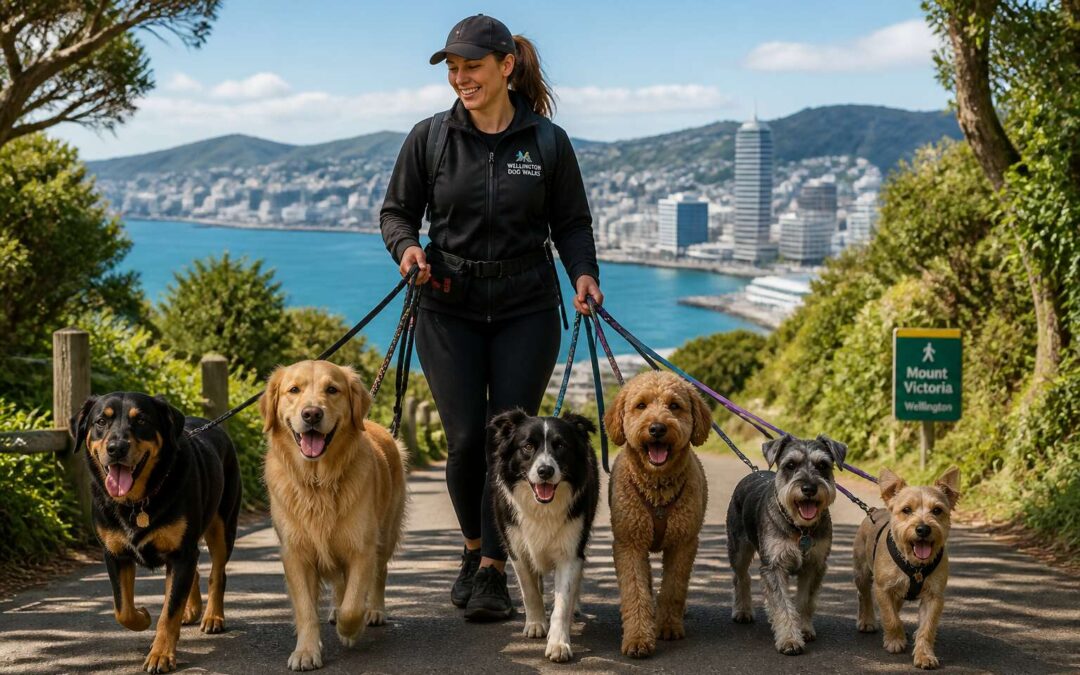
Mount Victoria presents another rhythm entirely. Its track network climbs through regenerating bush, and the summit gives sweeping views over the harbour. A dog walker wellington can tailor any route here:
- The gentle switchbacks of the Southern Walkway for relaxed strolls
- The steep eastern escarpment for athletic dogs needing exertion
- The Town Belt loops for quick sessions before work
These inner city trails carry their own character, rewarding early light with quiet and late afternoons with golden haze. Both suburbs remain essential to daily routines, offering the capital’s compact geography without compromise.
The South Coast Track: From Island Bay to Red Rocks
For those who tire of the Town Belt’s manicured paths, the South Coast Track from Island Bay to Red Rocks offers a different schooling. A dog walker wellington soon learns that this route is a negotiation with the elements. The wind arrives without apology, and the surf thunders close enough to mist your coat.
The track alternates between volcanic boulders and soft sand. The tide dictates your passage more reliably than any map. A dog walker wellington with a water-happy companion learns to read the swells, because the ocean here does not suffer fools. Owners discover whether their dog possesses the good sense to retreat from an advancing wave.
- Check the tide table before setting out
- Keep dogs on lead near the seal colony
- Carry water, as the track offers little shade
This is walking for those who prefer their coastline raw. It reminds us that Wellington’s edges remain untamed.
The Town Belt: Green Corridors Through the City
Wellington’s green heart beats through the Town Belt, a chain of parks and reserves that thread through the city’s hills. For a dog walker wellington, this system of trails offers a connection to the urban landscape few other cities can match. The paths climb and dip with the terrain, passing through regenerating native bush and open grassland where the wind has room to move.
The belt weaves across dozens of neighbourhoods, each with its own character. From the steep staircases of Wadestown to the sheltered gullies of Ngaio, the options multiply with every hill. A dog walker wellington learns to match the route to the weather and the dog’s energy, choosing shaded valleys on hot afternoons or exposed ridgelines when the sun breaks through.
The Northern Walkway forms a backbone, linking many of these green spaces. It offers long, uninterrupted stretches where a dog can move freely under voice command. The Town Belt connects more than parks; it connects communities of walkers who share the same trails at dawn and dusk.
– Always carry a spare lead for unfenced road crossings
– Keep to the main paths during lambing season in the outer reserves
– Pick up after your dog; the belt is shared with families and runners
A dog walker wellington quickly discovers that the Town Belt rewards those who explore beyond the first bend. Each outing reveals a new vista or a hidden corner where the city noise fades to a distant hum.
Hutt Valley and Suburban Walking Hotspots
Wellington’s suburban fringe hides a network of trails that most visitors never see. The Hutt Valley alone offers a dog walker wellington a shoreline promenade at Petone, plus the rugged loops of East Harbour Regional Park.
- Petone Foreshore: flat, exposed, ideal for dogs that need to chase the horizon
- Korokoro Dam: steep bush track with stream crossings
- Wainuiomata Coast: wild, empty, and muddy enough to test any canine
Closer to the city, Khandallah Park and Ngaio Gorge deliver quick hills without the commute. Regulars learn these suburban hotspots by heart, swapping sealed paths for grass verges and hidden staircases. The loops climb into the wind, where off-leash areas reward early risers and punish the unprepared with mud up to the elbows.
Off-Leash Beaches and Their Seasonal Rules
For every well-heeled canine in Oriental Bay, there exists a scrappy terrier in Newtown with a superior knowledge of the back alleys. The true measure of a neighbourhood, I have found, is not its coffee quality but its tolerance for muddy paws. A dog walker wellington worth their salt knows that Oriental Bay offers a glamorous promenade where the canine social ladder is climbed with every tail wag, while Thorndon’s steep, historic lanes provide a leg-stretching challenge that separates the weekend strollers from the serious athletes.
The seasonal rules for off-leash beaches are a peculiar form of local legislation, enforced with the quiet ferocity of a librarian shushing a noisy patron. From Labour Weekend to Easter Monday, the sands of Lyall Bay become a strict, leashed environment, a daily social experiment in canine restraint. However, the shoulder seasons reveal a different truth. The rules are simple, yet frequently ignored.
– Dogs are permitted off-leash on Lyall Bay between Easter Monday and Labour Weekend.
– Breaker Bay allows off-leash freedom only before 9 am and after 6 pm during daylight saving.
– Houghton Bay maintains a full-time leash rule, regardless of the season or the emptiness of the beach.
The local dog walker wellington navigates these temporal boundaries with the precision of a Swiss clockmaker, knowing precisely when the first wave of unleashed freedom is permissible.
Navigating Shared Pathways with Cyclists and Runners
Kelburn’s summit paths wind past historic villas, where a dog walker wellington can practise recall without the interruption of weekend traffic. Further south, the waterfront promenade presents a different rhythm entirely. Commuter cyclists rush toward the CBD while runners with strobing armbands claim their own lane.
Sharing these corridors requires reading movement in advance. A professional walker steps aside for the peloton, keeps the lead short at blind corners, and understands that the golden rule changes with the tide of foot traffic.
- Keep dogs on the inside of the bend
- Cross the cycle lane only at designated zones
- Allow extra space at pinch points like Clyde Quay wharf
Miramar’s coastal path offers grassy verges and a slower pace. Each neighbourhood tests a different skill. The smart dog walker wellington adapts without hesitation.
The Cost of Professional Dog Walking Services in Wellington
Average Rates for Solo and Group Walks
Wellington’s cost of living is no secret, and professional dog walking services reflect that reality. Most solo walks in the central city will set you back between $35 and $50 for a half hour, while a full hour typically lands in the $50 to $70 range. These prices fluctuate based on the walker’s experience, the specific suburb, and whether your dog has particular needs like extra patience for a nervous rescue. Group walks offer a more economical entry point, usually falling between $25 and $40 per session.
The price per session often tells only half the story. Many walkers in the capital factor in travel time, which is significant given Wellington’s hilly geography and frequent weather interruptions. A dog walker Wellington based in Karori might charge a different rate than one operating solely within the flat confines of the CBD. Here is a quick breakdown of what you can expect:
– Solo walk (30 minutes): $35 to $50
– Solo walk (60 minutes): $50 to $70
– Group walk (60 minutes): $25 to $40 per dog
– Multi-dog household discount: Often 10% to 15% off the second dog
These rates are not arbitrary. The cost covers insurance, GPS tracking software, and the walker’s own time for pickups and drop-offs across a sprawling city. A walker who offers detailed daily reports and uses premium gear will charge at the higher end of that spectrum. For owners on a budget, group walks provide socialisation benefits that many solo sessions lack, making them a strategically smart choice for high-energy breeds. Ultimately, the price you pay reflects the level of accountability you demand from a dog walker Wellington professional, and that is worth a premium.
Additional Services: Feeding, Training, and Home Visits
Additional services extend the value of a dog walker wellington arrangement beyond the walk itself. Feeding visits ensure a dog with dietary restrictions receives a midday meal exactly on schedule. Some walkers also offer training reinforcement, practising commands like ‘sit’ and ‘heel’ throughout the route. Home visits suit puppies or senior dogs who need toilet breaks and medication without a full walk.
These services typically cost between $12 and $25 per visit, a modest investment for the convenience they deliver! Owners often combine several add-ons:
- Feeding and medication administration
- Home visits for puppies and elderly dogs
- Training reinforcement during walks
A professional dog walker wellington who books a regular weekly slot may offer discounted rates for bundled services. That arrangement gives the dog consistency and the owner confidence in their care routine.
Monthly Packages vs. Ad-Hoc Bookings
Monthly packages from a dog walker wellington often trim the per walk rate by a third, which rewards owners who plan ahead. Ad-hoc bookings cost more per outing, but they bring flexibility for chaotic weeks. Your choice hinges on whether you value predictability or spontaneity.
- Monthly package: a fixed slot, usually cheaper per walk, and the same walker each time.
- Ad-hoc booking: pay per session, choose dates freely, but you might meet a different walker.
Some walkers require a monthly commitment even for occasional use. Others offer top ups that never expire. The real cost difference appears in cancellation policies and holiday surcharges.
Safety and Preparedness for Wellington Weather
Reading the Wind and Rain: Microclimates Across the Region
Wellington weather changes faster than a kelpie’s mood. One moment you are basking in northern suburbs sunshine, the next you are drenched on the south coast. This city has a dozen microclimates packed into a few square kilometers, and a professional dog walker wellington trusts must read these shifts daily. The wind off Cook Strait can drop the apparent temperature by five degrees in minutes, turning a pleasant stroll into a shivering ordeal for a short-coated whippet.
Experienced handlers know that Karori can be five degrees cooler than the waterfront. They plan routes based on hourly forecasts, not just morning observations. When the nor’wester kicks up, they avoid exposed ridgelines entirely. Rain arrives sideways here, so a quality waterproof jacket is essential gear, not a fashion statement. For those booking a dog walker wellington service, ask about their cancellation policy for sudden squalls. A good walker will check the radar before every outing and adjust the schedule accordingly. They will also know which parks turn to mud pits and which remain passable after a downpour. This local knowledge protects both the dogs and their precious energy levels.
Keeping Paws Safe on Hot Pavement and Make-Up Days
Pavement surface temperatures in Wellington can exceed 60 degrees Celsius by mid afternoon, enough to burn paw pads quickly. A professional dog walker wellington checks the ground with a bare palm before every outing. If the pavement is too hot for a hand, it is too hot for paws.
Heat reshapes the daily approach:
- Early starts beat the peak sun
- Grassy trails replace hot bitumen
- Shade breaks become mandatory
- Water stops appear at every fountain
Make-up days keep schedules honest. When a heat spike or a sudden southerly scrubs a walk, the session shifts to the next cool window. Reliable operators track credits and honour them without reminders. Nobody loses a paid session to the weather.
Emergency Protocols: First Aid and Vet Contacts
When a Wellington gale flips a patio umbrella or a rogue wave catches a cliff path walker, the difference between a scare and a crisis often comes down to preparation. A dependable dog walker wellington carries a first aid kit sized for canines, not humans. That means pressure bandages for torn pads, saline for grit in the eyes, and a thermal blanket for shock. Every route maps to the nearest veterinary clinic. The operator recites the contact numbers without checking a phone. Emergency protocols also cover the mundane: a swallowed bait, a bee sting, a sudden limp.
- The walker holds a current pet first aid certificate.
- The vet out-of-hours line is stored in the walker’s phone.
- A written incident report follows any injury.
Wellington weather isolates you quickly. A dog walker wellington with a direct line to an after-hours vet removes that worry.
GPS and Identification: Preparing Your Dog for a Reliable Return
Wellington weather can turn a familiar track into a disorienting grey blur within minutes. A dog that bolts after a hare or loses the scent in a gust can be out of sight before the walker calls twice. Preparation matters more than reflexes.
A dependable dog walker wellington checks that every dog wears a collar with an up to date tag, and that the microchip details match the owner’s current phone number. Some clients add a GPS tracker to the collar, which helps locate a dog in the bush or along the south coast where landmarks vanish in sea mist.
- Check the tag engraving includes a mobile number, not just a home address.
- Confirm the microchip registry has a backup contact.
- Test the GPS tracker battery before each walk.
These small checks are the difference between a lost dog and a found one.
Seasonal Adjustments: Winter vs. Summer Walking Schedules
Wellington’s seasons demand different rhythms. A dog walker wellington adjusts start times to match daylight and temperature, not habit. In winter, the morning walk often begins later, after frost lifts and the wind settles. Summer shifts the schedule to early dawn or late evening, when the sun loses its bite.
Consider the seasonal checklist:
- Winter: shorten exposed coastal routes, add a reflective layer for low light.
- Summer: carry water, seek shaded tracks, and watch for heat stress.
These adjustments protect the dog and the walker. A fixed routine ignores the weather; a flexible one respects it.